

Baratang
– Places to visit in Baratang –
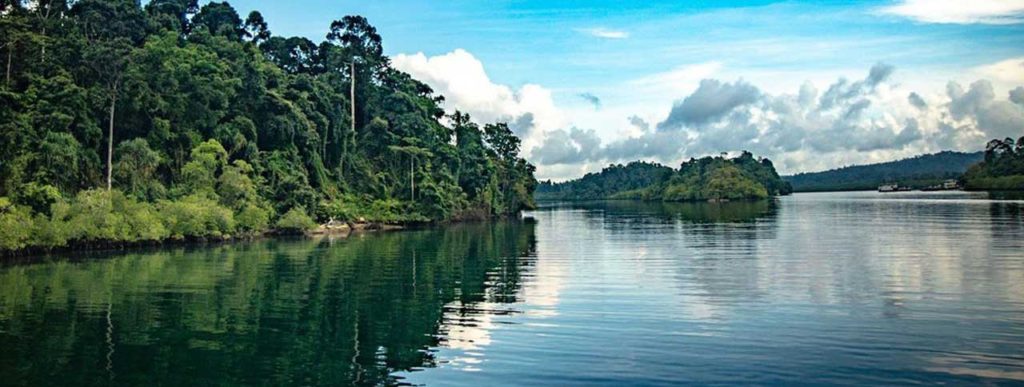
Baratang Island is an island of the Andaman Islands. It belongs to the North and Middle Andaman administrative district, part of the Indian union territory of Andaman and Nicobar Islands. The island lies 150 km (93 mi) north of Port Blair. It belongs to the North and Middle Andaman administrative district, part of the Indian union territory of Andaman and Nicobar Islands. The island is lying 137 km (85 mi) north from Port Blair.
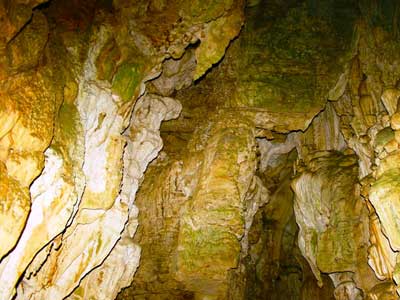
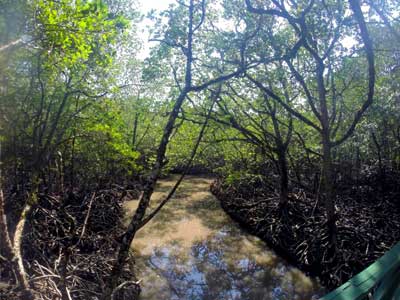
The beautiful Limestone Caves in Andaman are a visual treat to a nature lover. Limestone is a sedimentary rock formed at the bottom of the sea. It is formed over millions of years when various deposits of marine life, shells, corals and skeletons undergo a natural compression to form unique shapes within the cave. The caves are lined up with stalactites and stalagmites that hold the secret of a million years of Andaman. Nestled deep within the mangroves and amidst the lush rainforest, the Limestone caves in Andaman are highly recommended to be on your Andaman itinerary. Here’s what to expect when you visit the Limestone caves in Andaman
Limestone caves are a wonder to see and surely a visual treat to the eyes. These caves are one of the deepest man-found hollow and purely natural in its existence which formed over millions of years back. Fundamentally sedimentary rocks, limestone caves were formed due to compression of deposits like algae, marine life, corals, shells and skeletons of various water species. From walls, floors to the ceiling, the caves are carrying a rough yellow and white color and its cavities are very much virgin and untouched at various locations even today making it a must visit location during your trip to Andaman.
Wondering how these caves actually formed? If you look for a fascination that Mother Earth shows, it is right here. Limestone caves were primarily made with a natural phenomenon under the earth’s surface. Starting with the compression of deposits due to overhead pressure, there was a heterogeneous combination of the marine deposits and algae. This combo performed various chemical reactions while releasing oxygen in the surroundings. As soon as this process was taking place, acidic groundwater made its way from beneath while leaving the cavities behind by dissolving the calcium content.
With time and on, due to changes in water level and movement of earth’s crust, these caves had exposure to dry and open air. Since the time, carbonic acid in rainwater eroded these limestones along making a variety of genesis within the cave walls. This still is taking place and changing the character, texture, and hues of the walls. Also, the caves carry such a character that it is still evolving in various forms even now. So one must witness this must visit place in Andaman before nature changes its track and gives a new transition tomorrow.
Another interesting feature within the limestone cave is the presence of Stalactite and Stalagmites; in which stalactite is the conical shape that you see hanging from the roof of the cave. Whereas Stalagmites are stalactites in reverse and are conical rock-like structures formed on the floor of the cave. You will surely get a feeling of Ice-age movie, except that instead of white ice, one can have limestone stones at the forefront.
These beautiful caves give amazing styles, designs, textures that were purely formed according to the reactions they went through. Slippery floors, mesmerizing formations and deep of the deepest caves where even light can’t reach could be noticed. So you may need to take torchlight to explore the deep locations here. After finishing a visit within, have some coconut water and snacks at the nearby vendor stalls and get refreshed with the tropical waters and lush green views.
Moreover, the trail to reach Baratang island’s limestone caves is also very interesting. It passes through the forests and one needs to take a jetty ride to reach. This trail is itself so beautiful that reminds you how much nature and its beauty is essential to survive. With a short trek of about 10 minutes, these caves present itself, as if coming out of the earth fresh and live
The distance between Port Blair and Baratang island is approximately 100 km through the narrow Andaman Trunk Road (ATR) and a drive of around 2-2.30 hours will make one land here.
One needs to take a 3-step process to reach these beautiful caves that start from Port Blair to Jirkatang first and the distance between the two is 46 km. Interestingly, plan to visit here could be made in time slots as one has to pass through the tribal region or Jarawa Forest Reserve. Vehicles are welcome to join the convoy led by a state bus and armed forest guards on board for the safety of tourists. Make sure, you plan according to the convoy that leaves only at 6 AM, 9 AM, 12 noon and 3 PM.
After this drive, reach Middle Straits which is 47 Km from Jirkatang. The stretch is again very much vulnerable and it is best advised to cross it with the forest officials. 2-wheelers are not allowed here and all the vehicles move at a steady speed without any overtakes, noise, rolling down the windows and disturbance to the locals. Any kind of photography is absolutely prohibited and one can see forest officials patrolling in the region regularly. One can even observe Jarawa tribesmen following their routine life and wonder the way they are living peacefully without fast technology or lifestyle full of rush.
Now it’s time to catch the jetty ride. Park the cars at the specified parking locations and a mere 10 Rs ticket will help you in crossing the strait within 10 minutes. Finally, you get to reach Baratang (Nilambar) Jetty and catch the permits to move ahead.
Wondering where are the limestone caves? Get ready for a 15-minute speedboat ride and pass through dense mangrove forests that stand to smile from the side of the aisle. Welcome yourself to the limestone caves and begin to observe the beauty with the naked eyes.
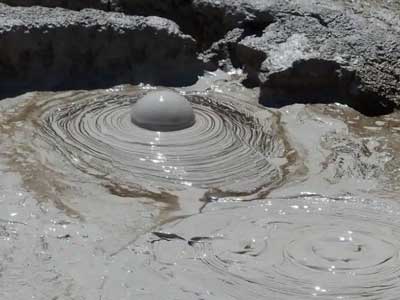
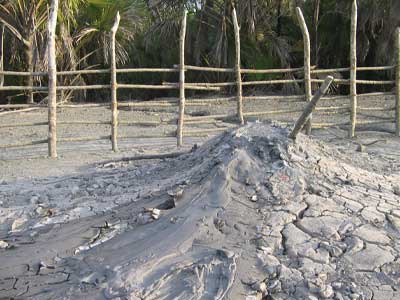
When you come to Baratang, you see Limestone Caves first. So after seeing the Limestone Caves, when you come back to the Baratang harbor once again, from there you need to take local jeeps that take you from there to a footpath leading towards the gateway of Mud Volcano. So in short, reaching Mud Volcano is a combination of 10 minutes Jeep ride plus 10 minutes walk Mud volcano, mound of mud heaved up through overlying sediments. The craters are usually shallow and may intermittently erupt mud. These eruptions continuously rebuild the cones, which are eroded relatively easily.
Mud volcanoes are created by hot-spring activity where large amounts of gas and small amounts of water react chemically with the surrounding rocks and form a boiling mud. Variations are the porridge pot (a basin of boiling mud that erodes chunks of the surrounding rock) and the paint pot (a basin of boiling mud that is tinted yellow, green, or blue by minerals from the surrounding rocks).
Mud volcanoes, entirely of a no igneous origin, occur only in oil-field regions that are relatively young and have soft, unconsolidated formations. Under compositional stress, methane and related hydrocarbon gases mixed with mud force their way upward and burst through to the surface, spewing mud into a cone like shape. Because of the compositional stress and the depth from which the mixture comes, the mud is often hot and may have an accompanying steam cloud.